
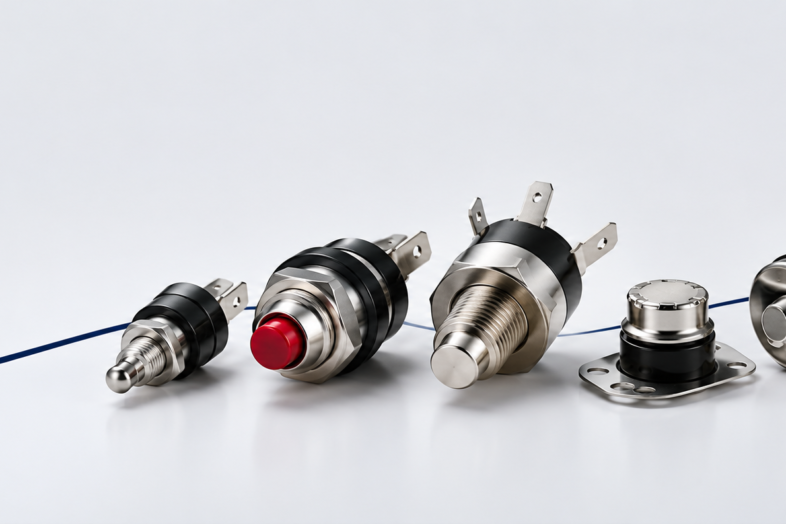
When you look into the cockpit of a modern commercial airliner, a military transport plane, or a private jet, your eyes are immediately drawn to the complex displays and flight controls. But behind the panels and lining the sidewalls sits an unassuming, densely packed matrix of small buttons.
These are the aircraft circuit breakers. In the high-stakes world of aerospace engineering, these small components act as the final line of defense against electrical fires, system failures, and catastrophic shorts.
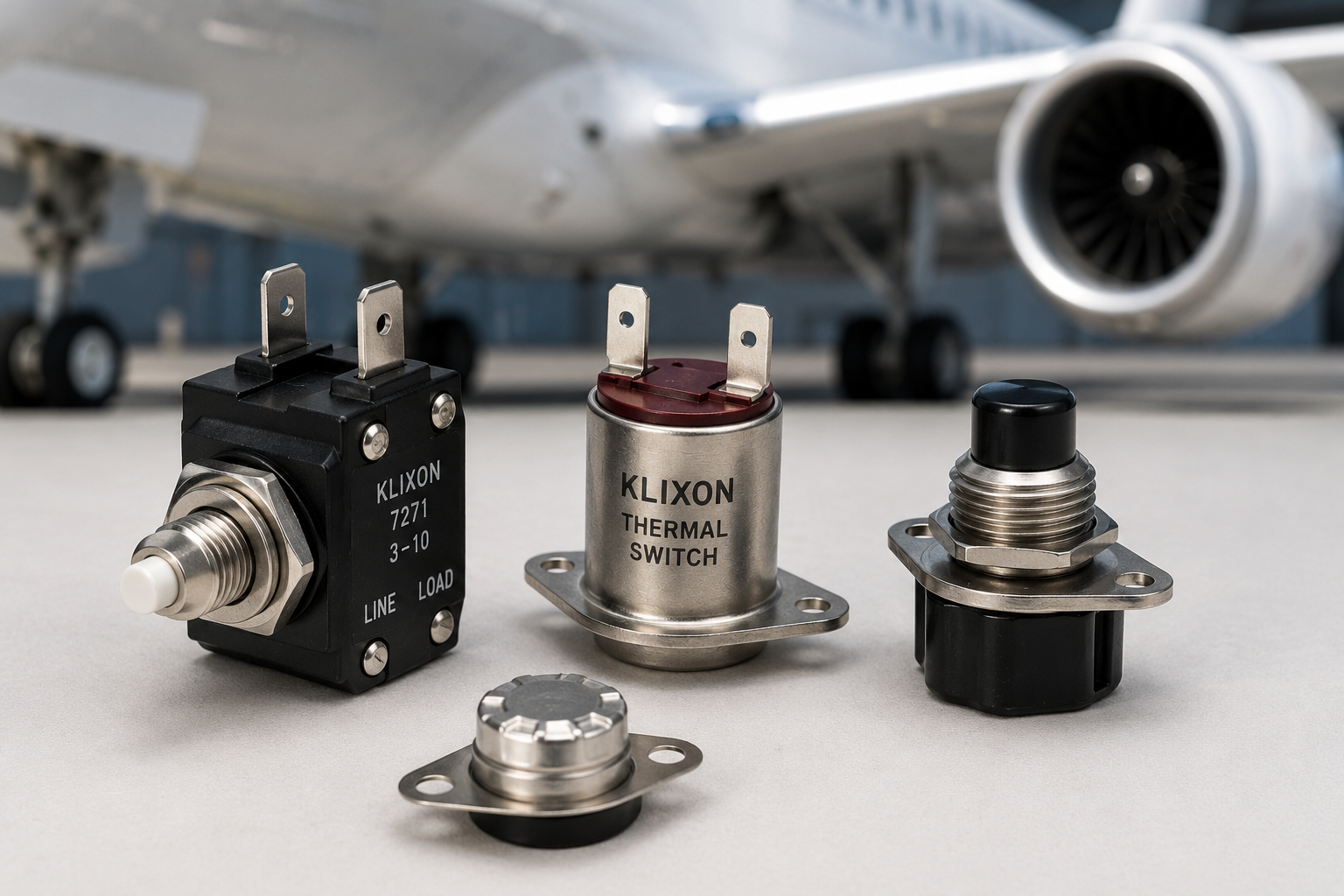
Among all the names in aerospace electrical protection, one brand has remained an undisputed industry benchmark for decades: Sensata KLIXON. Whether operating in the freezing upper limits of the troposphere or navigating a punishing sandstorm over desert airfields, KLIXON circuit breakers deliver unyielding reliability.
Let us break down why aviation engineers, maintenance, repair, and overhaul (MRO) facilities, and defense operators globally trust this thermal-mechanical marvel to protect critical avionics.
The Core Problem: Why Standard Circuit Breakers Fail in Flight
In a ground-based electrical system, like the one in your home or office, a circuit breaker operates in a relatively controlled environment. The ambient temperature remains stable, there is virtually zero vibration, and the physical orientation of the panel never changes.
Aerospace applications turn these comfortable assumptions completely upside down. An aircraft electrical system faces an array of brutal environmental stressors:
- Extreme Thermal Swings: A plane sitting on a runway in Dubai can experience cabin soak temperatures exceeding 50°C. Within thirty minutes, that same aircraft can cruise at 35,000 feet, where the outside air temperature plummets below -55°C.
- Constant Kinetic Stress: Heavy vibration from engines, turbulent air currents, and the violent impact of landings subject components to persistent gravitational and mechanical forces.
- Atmospheric Fluctuations: Drastic changes in altitude affect air density, which alters heat dissipation and increases the risk of electrical arcing (electricity jumping across a gap).
- Particulate Ingress: Fine desert sand and dust can slip into mechanical housings, jamming standard delicate switch mechanisms.
If you put a standard thermal circuit breaker into this environment, it would fail immediately. Standard thermal elements rely entirely on heat to expand a metal strip and trip the circuit. If the surrounding air is boiling hot, it will trip too early (known as a nuisance trip), cutting power to critical navigation systems. If the surrounding air is freezing, it might not trip at all during a wiring short, leading to an inflight fire.
The KLIXON Breakthrough: The Bi-Metallic Snap-Action Disc
To conquer these harsh aerospace realities, KLIXON engineered a radically simple yet elegant solution: the precisely calibrated, bimetallic snap-action disc.
Instead of a progressive, slow-bending metal strip found in commercial fuses or residential breakers, the KLIXON disc maintains its exact position until it hits a specific thermal threshold. The moment that threshold is crossed, it instantly snaps inside-out.
This mechanical suddenness offers two major advantages:
- Arc Elimination: By separating the electrical contacts instantly rather than slowly pulling them apart, it minimizes the time an electrical arc can form, protecting internal components from erosion.
- Vibration Immunity: Because the disc is pre-stressed to hold its shape until the threshold is met, it will not accidentally rattle loose or trip due to heavy turbulence or high-G maneuvers.
Ambient Temperature Compensation
To prevent environmental temperature swings from ruining the breaker’s accuracy, advanced KLIXON series incorporate a secondary bimetallic compensation element.
This secondary element reacts only to the ambient temperature of the room or cockpit. If the air gets hot, the compensation element adjusts the internal spacing, neutralizing the external heat’s effect on the main tripping disc. This ensures that whether it is -55°C or +125°C outside, the breaker trips exclusively when the electrical current running through the wire exceeds safe limits.
Exploring the Portfolio: Tailored Aerospace Protection
Not all aircraft systems are created equal. A low-voltage sensor in an entertainment system requires radically different protection than a heavy-duty engine starter generator. The KLIXON portfolio is distinctly tiered to match these specific needs.
| Product Series | Current Range | Primary Feature | Typical Application |
| KLIXON 7271 Series | 0.5A to 20A | Miniature, ultra-light (~7 grams), non-compensated | General aviation, light aircraft, delicate avionics buses |
| KLIXON 2TC Series | 1A to 25A | Miniature size, ambient-compensated, AS58091 qualified | Space-constrained cockpit panels, advanced military avionics |
| KLIXON 3TC / 15TC | 3A to 35A | Mid-range capacity, rugged housing, high vibration resistance | Actuation systems, windshield heating, flight controls |
| KLIXON 6752 Series | 50A to 100A | High-current power protection, thermal-magnetic option | Primary electrical buses, alternators, starter generators |
The Critical “Trip-Free” Design
Across all these families, safety is enforced by a hard mechanical rule: they are trip-free.
In an emergency, a pilot might instinctively try to hold a circuit breaker down to force a dying system to stay on. If a KLIXON breaker detects a continuous electrical fault, its internal mechanism will trip and cut power even if the pilot is physically holding the button down. It prioritizes the physical integrity of the aircraft’s wiring over human override, effectively preventing electrical fires.
Lifecycle Management: When to Replace an Aircraft Breaker
Despite their legendary durability, circuit breakers are mechanical wear-items that operate under immense pressure. They do not last forever. Proper fleet lifecycle management requires vigilant inspection based on standard aviation guidelines:
- The 10-Year Rule: Many operators enforce a mandatory replacement window once a circuit breaker has been in active service for 10 years, regardless of cycle count, due to internal material fatigue.
- Trip Drift: During routine ground testing, if a breaker’s trip response time begins to drift outside its specified inverse time-current curve, it must be culled.
- Mechanical Wear: Any physical stickiness, cracked casing, loose mounting, or discoloration on the push-button face indicates heat damage and requires an immediate swap.
- Operational Cycles: High-use breakers that are regularly used as manual switches during pre-flight checks may approach their rated cycle limit (typically 2,500 to 5,000 electrical cycles under load) faster than dormant breakers.
Sourcing Authenticity: The Global and Regional Supply Chain
Because these small devices stand between an aircraft and a catastrophic electrical fire, the aviation market is heavily protected against counterfeit or sub-par components. Every single breaker must feature full batch traceability, an authorized FAA/EASA Form 1 airworthiness release, and valid technical documentation.
For specialized regional challenges—such as operating aircraft in the Middle East—sourcing must be incredibly precise. Operators in the UAE, for example, frequently turn to specialized technical distributors like Inventechs Technology.
Desert flying conditions require hardware with strict IP67 or Category S (sand and dust) environmental ratings under DO-160 standards. Having localized, factory-calibrated inventory ensures that regional commercial airlines, military operators, and MRO hubs can minimize their Aircraft on Ground (AOG) times without sacrificing airworthiness compliance.
Final Thoughts
The marvel of modern aviation relies entirely on the invisible infrastructure humming behind the composite panels. By standardizing on precisely calibrated, ambient-compensated protection like Sensata KLIXON, the aerospace industry ensures that electrical anomalies remain quiet, contained non-events rather than headlines. It is a testament to the fact that sometimes, the most critical safety systems on a multi-million dollar aircraft are the ones designed to simply snap and click in absolute silence.


 Login with Google
Add Comment