
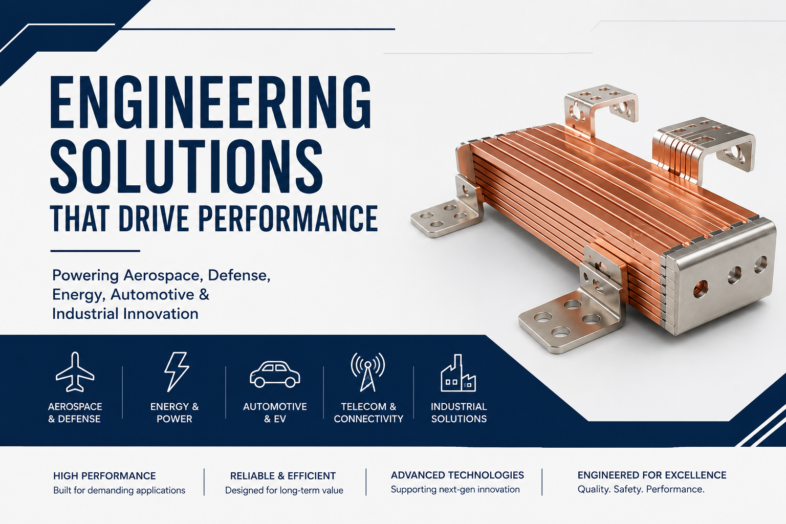
Every modern engineering project has one thing in common: the need for reliable electrical performance. Whether it’s an aircraft, electric vehicle, renewable energy installation, defense platform, or industrial automation system, success depends on components that deliver consistent performance under demanding operating conditions.
As industries move toward electrification, automation, and intelligent systems, engineers are no longer looking for components that simply perform a task. They need solutions that improve efficiency, reduce maintenance, optimize space, and support long-term operational reliability.
This shift has increased the demand for advanced engineering solutions, particularly in industries where safety, precision, and uninterrupted performance are essential. Companies developing next-generation technologies are now investing in smarter power distribution systems, precision sensors, circuit protection devices, and engineered electrical components that improve both system performance and lifecycle costs.
Organizations looking for integrated engineering expertise can explore the complete range of industrial solutions offered by Inventechs Technology, where aerospace, defense, energy, automotive, and industrial applications come together under one engineering platform.
Why Traditional Electrical Systems Are No Longer Enough
Electrical systems have become significantly more complex over the past decade.
Aircraft now contain thousands of interconnected electronic systems. Electric vehicles require sophisticated battery management architectures. Renewable energy installations must handle fluctuating power loads. Industrial automation demands continuous uptime with minimal maintenance.
These requirements expose the limitations of conventional wiring and outdated electrical infrastructure.
Modern systems require components that can:
- Handle higher current loads
- Minimize electrical losses
- Improve thermal performance
- Reduce installation complexity
- Increase operational reliability
- Support compact system designs
Instead of treating electrical components as individual parts, engineers increasingly design complete power management ecosystems.
The Growing Importance of Intelligent Power Distribution
Power distribution is no longer just about delivering electricity from one point to another.
Today’s systems must distribute power efficiently while minimizing heat generation, voltage drops, electromagnetic interference, and maintenance requirements.
Poorly designed power distribution can lead to:
- Excessive energy loss
- Higher operating temperatures
- Equipment failure
- Increased maintenance costs
- Reduced equipment lifespan
- Unexpected downtime
For industries where downtime translates directly into financial loss or operational risk, improving electrical distribution has become a strategic investment rather than a technical upgrade.
Why Busbar Technology Is Becoming the Preferred Choice
One of the biggest changes in electrical engineering is the transition from traditional cable assemblies to advanced busbar systems.
Busbars provide a centralized method for transmitting electrical current while reducing resistance and improving efficiency.
Compared with conventional cable systems, engineered busbars provide several measurable advantages.
Better Electrical Efficiency
Lower electrical resistance means more energy reaches critical equipment instead of being lost as heat.
Improved efficiency becomes increasingly valuable in high-current applications where even small power losses accumulate into significant operating costs.
Improved Thermal Management
Heat remains one of the primary causes of electrical component degradation.
Busbars distribute current more evenly while dissipating heat more effectively than many conventional cable installations.
Lower operating temperatures contribute directly to longer equipment life.
Space Optimization
Engineering teams constantly work within limited installation space.
Compact electrical architectures reduce enclosure sizes while simplifying maintenance access.
Busbar systems help eliminate unnecessary wiring complexity without sacrificing performance.
Faster Installation
Reduced wiring means fewer connections, lower installation time, and fewer opportunities for assembly errors.
This becomes especially valuable for manufacturers producing equipment at scale.
Greater Reliability
Every electrical connection represents a potential failure point.
Reducing the number of individual cable connections improves long-term reliability while simplifying maintenance activities.
How Laminated Busbars Improve Modern Engineering
Among today’s electrical innovations, laminated busbars represent one of the most significant advances in power distribution.
Rather than using numerous individual cables, laminated busbars integrate multiple conductive layers into a compact engineered assembly.
This design provides several technical advantages.
| Traditional Cable Systems | Laminated Busbars |
|---|---|
| Larger installation space | Compact architecture |
| Higher resistance | Lower electrical losses |
| More wiring complexity | Simplified installation |
| Increased heat generation | Improved thermal performance |
| More maintenance points | Higher reliability |
| Difficult expansion | Easier system integration |
For engineers designing electric vehicles, aerospace platforms, renewable energy systems, railway applications, and industrial equipment, laminated busbars offer significant long-term benefits.
A detailed technical explanation of these advantages is available in Inventechs’ guide on Top 6 Key Benefits of Using Busbar:
https://www.inventechs.ae/top-6-key-benefits-of-using-busbar/
Industries Driving Demand for Advanced Engineering Components
Several industries are accelerating the adoption of intelligent electrical systems.
Aerospace and Defense
Few industries demand greater reliability than aerospace.
Every component must withstand vibration, extreme temperatures, changing pressure conditions, and continuous operation.
Critical applications include:
- Aircraft electrical distribution
- Landing gear systems
- Flight control systems
- Circuit protection
- Rotary transmission
- Position sensing
- High-voltage switching
System reliability directly influences operational safety.
Electric Vehicles
Vehicle electrification has transformed automotive engineering.
Manufacturers now prioritize:
- Battery efficiency
- Compact electrical systems
- Faster charging
- Thermal management
- High-voltage safety
- Lightweight construction
Advanced electrical components play an essential role in achieving these objectives.
Renewable Energy
Solar farms, battery storage systems, and wind energy installations require reliable power distribution capable of handling variable electrical loads.
Efficient electrical architectures improve both energy conversion and long-term system reliability.
Industrial Automation
Factories increasingly rely on intelligent electrical systems to maximize productivity.
Reliable electrical infrastructure helps reduce downtime while improving equipment availability and operational efficiency.
Selecting Components Based on Lifecycle Value
Purchase price alone rarely determines the true cost of an engineering component.
Engineers now evaluate products using lifecycle performance metrics.
Important considerations include:
- Expected service life
- Maintenance frequency
- Energy efficiency
- Reliability under load
- Environmental performance
- Installation costs
- Replacement costs
Higher-quality engineered components often produce lower total ownership costs over the lifetime of the equipment.
Engineering Solutions Beyond Individual Components
Modern engineering projects require more than access to premium products.
Successful implementation depends on technical expertise throughout the design process.
Engineering support may include:
- Application analysis
- Component selection
- Electrical simulations
- Thermal optimization
- Design consultation
- Integration support
- Performance testing
This collaborative approach helps reduce project risk while improving overall system performance.
Why Manufacturer Partnerships Matter
Engineering quality begins with manufacturing quality.
Organizations working with internationally recognized technology manufacturers gain access to proven products supported by decades of engineering experience.
Inventechs works alongside globally respected manufacturers across multiple engineering disciplines, allowing customers to source integrated solutions from trusted technology leaders rather than relying on disconnected suppliers.
 Login with Google
Add Comment